Neurology care for the brain, spine and nerves
Neurologists diagnose and treat conditions of the brain, spinal cord, nerves and muscles using medicines, therapy and long-term follow-up.
What is neurology?
Neurology is the medical specialty concerned with the nervous system. A neurologist is a physician who investigates symptoms such as headache, seizures, weakness, numbness, tremor, dizziness and memory loss, finds their cause and treats them without surgery.
Many neurological conditions are long-term. Care therefore involves more than a single visit: it includes confirming the diagnosis, starting treatment, adjusting it over time and helping the person and their family manage daily life. When an operation may help, the neurologist works with a neurosurgeon.
Conditions we evaluate
Each page explains the condition, its symptoms, how it is diagnosed and how it is treated.
Stroke
Warning signs, emergency assessment, treatment and recovery after a stroke or mini-stroke.
Read about strokeEpilepsy and seizures
Fits, blackouts and episodes of lost awareness in adults and children.
Read about epilepsy and seizuresHeadache and migraine
Frequent, severe or changing headaches that painkillers no longer control.
Read about headache and migraineMovement disorders
Tremor, stiffness and slowness, including Parkinson's disease.
Read about movement disordersMemory problems
Forgetfulness, confusion and dementia, including Alzheimer's disease.
Read about memory problemsNerve and muscle disorders
Numbness, tingling, burning feet and unexplained weakness.
Read about nerve and muscle disordersSymptoms that may need medical evaluation
- Headaches that are frequent, severe or changing in pattern
- Fits, blackouts or episodes of lost awareness
- Weakness, numbness or tingling in the face, arms or legs
- Tremor, stiffness or slowness of movement
- Increasing forgetfulness or confusion
- Dizziness, loss of balance or repeated falls
- Double vision or sudden loss of vision
- Difficulty speaking or swallowing
These symptoms have many causes, and most are not serious. An examination is needed to find the reason. Read more about stroke, epilepsy and seizures, headache and migraine, movement disorders, memory problems, nerve and muscle disorders.
When it is an emergency
Sudden weakness or numbness, facial droop, slurred speech, a sudden severe headache, a seizure lasting more than 5 minutes, or symptoms after a head or spine injury need immediate care. Call our 24-hour emergency line on 040 4189 4777, or call 108 for an ambulance. Do not wait for an appointment.
How diagnosis and treatment work
- Listening and examining
- Most neurological diagnoses begin with a detailed history and a physical examination of strength, sensation, reflexes, coordination, speech and memory.
- Tests when they are needed
- Depending on the problem, a neurologist may request an MRI or CT scan, an EEG to record brain activity, nerve conduction studies and EMG, or blood tests. Tests are chosen for the individual.
- Treatment
- Treatment may involve medicines, physiotherapy and other rehabilitation, changes in daily habits and regular review. Emergency conditions such as stroke need immediate hospital care.
- Working with neurosurgery
- If a scan shows a condition that may need an operation, such as a tumour or a compressed nerve, the neurologist refers to a neurosurgeon.
CT, MRI, EEG and nerve conduction studies are available on site at Siddarth Neuro Hospital. For other tests named on this site, please call the hospital to confirm availability.
Not sure which specialist you need? Our team can guide you.
Why choose Siddarth Neuro Hospital?
Siddarth Neuro Hospital is a specialty hospital in Miyapur, Hyderabad, focused on conditions of the brain, spine and nerves. It is NABH accredited and has a NABL accredited laboratory. It has a round-the-clock emergency room and a 24-hour emergency stroke care unit. Its neurology and neurosurgery services work together, so a patient who needs both can be assessed in one place.
At a consultation, the doctor listens to your history, examines you and explains which tests, if any, are needed. You leave with a clear plan for treatment and follow-up. Family members are welcome to attend and ask questions.
Facilities at the hospital
- Emergency room
- Open 24 hours, 7 days a week.
- Emergency stroke care unit
- Receives stroke patients at any hour.
- CT scanner on site
- Brain and spine CT scans are done in the hospital, without transfer to another centre.
- MRI scanner on site
- Detailed imaging of the brain, spine and nerves in the same building.
- EEG
- Recording of the brain's electrical activity, used in the assessment of seizures and epilepsy.
- Nerve conduction studies
- Tests of how well the nerves carry signals, used for numbness, tingling and weakness.
- Intensive care unit
- ICU beds for patients who need close monitoring.
- Operating theatres
- For brain and spine surgery.
- Neuronavigation unit
- A computer-guided system that uses the patient's scans to help the surgeon plan and locate the target precisely during brain and spine surgery.
- Rehabilitation and therapy
- Physiotherapy, occupational therapy and speech therapy for recovery after illness, injury or surgery, and for children with developmental needs.
Treatments and procedures available
- Stroke care
- Comprehensive care from emergency assessment in the stroke unit through to rehabilitation and prevention of further strokes.
- Epilepsy management
- Diagnosis with EEG and imaging, and long-term treatment for adults and children.
- Brain tumour resection
- Surgery to remove tumours of the brain, planned with MRI and neuronavigation.
- Micro-neurosurgery
- Operations on the brain, spine and nerves performed under an operating microscope.
- Deep brain stimulation
- A surgical treatment for selected patients with Parkinson's disease, tremor or dystonia.
- Minimally invasive spinal reconstruction
- Spine surgery through small incisions to relieve nerve pressure and stabilise the spine.
Whether a procedure is suitable depends on an individual assessment by the specialist.
Accreditations
- NABH
- Accredited by the National Accreditation Board for Hospitals and Healthcare Providers, which assesses hospitals on patient safety and quality of care.
- NABL
- Laboratory accredited by the National Accreditation Board for Testing and Calibration Laboratories, which assesses the accuracy and reliability of laboratory testing.
Our neurology specialist
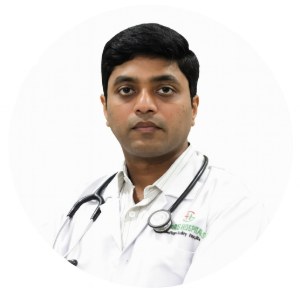
Dr. T. Siddarth Reddy
Founder and Managing Director, Senior Consultant Neurologist
- Qualifications
- MBBS, MD, DM (Neurology, Gold Medalist), Fellowship in Pediatric Neurology (Texas, USA)
- Specialty
- Adult and paediatric neurology
- Registration no.
- 61730
- OPD hours
- Monday to Saturday, 11 am to 8 pm
Questions about neurology care
When should I see a neurologist?
See a neurologist for persistent or severe headaches, seizures, unexplained weakness or numbness, tremor, memory decline, balance problems or any symptom your doctor thinks may come from the nervous system.
What is the difference between a neurologist and a neurosurgeon?
A neurologist is a physician who diagnoses and treats nervous system conditions with medicines and therapy. A neurosurgeon is a surgeon who operates on the brain, spine and nerves. They often work together.
What should I bring to my appointment?
Bring previous prescriptions, scan films and reports, blood test results and a list of all your current medicines. A family member who has seen your symptoms can give useful information.
Will I need a scan?
Not always. Many conditions, including most headaches, are diagnosed from the history and examination. The doctor will explain why any test is recommended.
Do neurological conditions always need lifelong treatment?
No. Some are treated for a limited period and some need long-term management. Your doctor will explain what to expect for your condition.
What if my symptoms started suddenly?
Sudden weakness, facial droop, speech difficulty, a severe headache or a prolonged seizure are emergencies. Call 108 or go to the nearest emergency department without waiting for an appointment.
Need a neurological consultation?
Speak with the hospital team about appointments and available specialist consultations.
- Phone
- 040 4189 4777
- Address
- Siddarth Neuro Hospital
Mythri Nagar, Madeenaguda, Miyapur
Hyderabad, Telangana - OPD hours
- Dr. T. Siddarth Reddy: Monday to Saturday, 11 am to 8 pm
Dr. Naveen Reddy V: Monday to Saturday, 10 am to 6 pm - Emergency
- Emergency room and emergency stroke care unit open 24 hours, 7 days a week
- Accreditation
- NABH accredited hospital, NABL accredited laboratory