Stroke treatment and neurological care
Learn the warning signs of a stroke, how doctors confirm it, which treatments may be used and how recovery is supported afterwards.
This can be an emergency
A stroke is a medical emergency. If someone's face droops, an arm is weak or speech is slurred, call our 24-hour emergency stroke care unit on 040 4189 4777, or call 108, now. Online booking is for follow-up and planned visits only.
What is a stroke?
A stroke happens when part of the brain suddenly loses its blood supply or when a blood vessel in the brain bursts. Brain cells need a constant flow of oxygen, so they begin to be damaged within minutes. The effects depend on which part of the brain is involved and how quickly blood flow is restored.
There are three main types. An ischaemic stroke is caused by a clot blocking an artery and accounts for most strokes. A haemorrhagic stroke is caused by bleeding into or around the brain. A transient ischaemic attack (TIA), often called a mini-stroke, causes the same symptoms but they clear within minutes or hours. A TIA is a warning that a full stroke may follow, so it needs urgent assessment even if the person feels normal again.
Without treatment, the damaged area can grow over the following hours. This is why doctors say that time is brain. Some people recover fully, while others are left with weakness, speech difficulty or memory problems that need rehabilitation.
Stroke symptoms and warning signs
Common symptoms
- Face drooping on one side
- Weakness or numbness in one arm or leg
- Slurred speech, or difficulty finding or understanding words
- Sudden loss of vision or double vision
- Sudden loss of balance or coordination
Less common symptoms
- Sudden severe headache unlike any before
- Sudden confusion or drowsiness
- Difficulty swallowing
- Vomiting with dizziness and unsteadiness
- Symptoms that appear and then disappear within minutes
Get emergency help now if
- Any of the symptoms listed here start suddenly
- Symptoms went away on their own, which may be a mini-stroke
- The person collapses, has a seizure or cannot be woken
Call our 24-hour emergency line on 040 4189 4777, or call 108 for an ambulance. Do not wait for an appointment.
These symptoms have many possible causes. Having one or more of them does not confirm a diagnosis. A doctor needs to examine you to find the cause.
Causes and risk factors
Most ischaemic strokes are caused by fatty deposits narrowing the arteries or by a clot travelling from the heart or neck vessels to the brain. Haemorrhagic strokes are most often linked to long-standing high blood pressure or to a weak spot in a blood vessel wall.
Stroke becomes more common with age, but it also affects younger adults. Many risk factors can be treated, which is why regular health checks matter.
Factors that raise the risk
- High blood pressure
- Diabetes
- Smoking and tobacco use
- High cholesterol
- Irregular heartbeat (atrial fibrillation) and other heart disease
- A previous stroke or mini-stroke
- Excess weight, inactivity and heavy alcohol use
- Family history of stroke
How a stroke is diagnosed
Doctors need to know quickly whether a stroke is caused by a clot or by bleeding, because the treatments are different. The tests used depend on the person's condition.
- Neurological examination
- Checks of speech, vision, strength, sensation and coordination to judge how severe the stroke is.
- CT scan of the brain
- Usually the first scan. It shows bleeding quickly and helps decide which emergency treatment is suitable.
- MRI scan
- Gives a more detailed picture of the damaged area, including small strokes that a CT scan can miss.
- Blood vessel imaging
- CT or MR angiography and ultrasound (Doppler) of the neck arteries look for blockages or narrowing.
- Heart tests
- An ECG and an echocardiogram look for rhythm problems or clots in the heart.
- Blood tests
- Check blood sugar, cholesterol, clotting and other factors that affect treatment.
This list describes tests that doctors commonly use. CT, MRI, EEG and nerve conduction studies are available on site at Siddarth Neuro Hospital. For other tests, please call the hospital to confirm availability.
Stroke treatment options
Treatment depends on the type of stroke, the time since symptoms began and the person's general health. A specialist decides which options are suitable after assessment and scans.
- Clot-dissolving medicine
- For some ischaemic strokes, a medicine given through a vein can dissolve the clot. It is only an option within a few hours of the first symptom, so the time symptoms began is important.
- Clot removal
- In selected people with a blockage in a large artery, a specialist may remove the clot through a thin tube passed up from the groin or wrist. This is done only in centres equipped for the procedure.
- Care for bleeding strokes
- Careful control of blood pressure, reversal of blood-thinning medicines and, in some cases, surgery to relieve pressure on the brain.
- Preventing another stroke
- Medicines to reduce clotting, lower blood pressure and cholesterol, and control diabetes, together with stopping tobacco.
- Rehabilitation
- Physiotherapy, speech therapy and occupational therapy usually begin as early as the person is stable.
- Follow-up care
- Regular reviews to adjust medicines, track recovery and manage risk factors over the long term.
No treatment can guarantee a particular result. Your doctor will explain the expected benefits and risks of each option for your situation.
Would you like to discuss stroke with a specialist?
When to see a neurologist
Book a consultation if any of these apply to you or a family member.
- You have had a stroke or mini-stroke and need follow-up care
- Weakness, speech or balance problems are not improving after a stroke
- You have several risk factors and want advice on prevention
- You have had brief episodes of numbness, vision loss or slurred speech in the past
Do not book online for an emergency
If symptoms are sudden or severe, or match the emergency signs listed above, an appointment is not the right route. Call our 24-hour emergency line on 040 4189 4777, or call 108 for an ambulance. Do not wait for an appointment.
Why choose Siddarth Neuro Hospital?
Siddarth Neuro Hospital is a specialty hospital in Miyapur, Hyderabad, focused on conditions of the brain, spine and nerves. It is NABH accredited and has a NABL accredited laboratory. It has a round-the-clock emergency room and a 24-hour emergency stroke care unit. Stroke patients are received in the emergency stroke care unit at any hour, and their care involves both neurology and neurosurgery. CT and MRI scans are done on site, so imaging does not require a transfer.
At a consultation, the doctor listens to your history, examines you and explains which tests, if any, are needed. You leave with a clear plan for treatment and follow-up. Family members are welcome to attend and ask questions.
Facilities at the hospital
- Emergency room
- Open 24 hours, 7 days a week.
- Emergency stroke care unit
- Receives stroke patients at any hour.
- CT scanner on site
- Brain and spine CT scans are done in the hospital, without transfer to another centre.
- MRI scanner on site
- Detailed imaging of the brain, spine and nerves in the same building.
- EEG
- Recording of the brain's electrical activity, used in the assessment of seizures and epilepsy.
- Nerve conduction studies
- Tests of how well the nerves carry signals, used for numbness, tingling and weakness.
- Intensive care unit
- ICU beds for patients who need close monitoring.
- Operating theatres
- For brain and spine surgery.
- Neuronavigation unit
- A computer-guided system that uses the patient's scans to help the surgeon plan and locate the target precisely during brain and spine surgery.
- Rehabilitation and therapy
- Physiotherapy, occupational therapy and speech therapy for recovery after illness, injury or surgery, and for children with developmental needs.
Treatments and procedures available
- Stroke care
- Comprehensive care from emergency assessment in the stroke unit through to rehabilitation and prevention of further strokes.
- Epilepsy management
- Diagnosis with EEG and imaging, and long-term treatment for adults and children.
- Brain tumour resection
- Surgery to remove tumours of the brain, planned with MRI and neuronavigation.
- Micro-neurosurgery
- Operations on the brain, spine and nerves performed under an operating microscope.
- Deep brain stimulation
- A surgical treatment for selected patients with Parkinson's disease, tremor or dystonia.
- Minimally invasive spinal reconstruction
- Spine surgery through small incisions to relieve nerve pressure and stabilise the spine.
Whether a procedure is suitable depends on an individual assessment by the specialist.
Accreditations
- NABH
- Accredited by the National Accreditation Board for Hospitals and Healthcare Providers, which assesses hospitals on patient safety and quality of care.
- NABL
- Laboratory accredited by the National Accreditation Board for Testing and Calibration Laboratories, which assesses the accuracy and reliability of laboratory testing.
Our neurology specialist
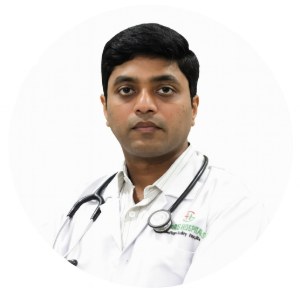
Dr. T. Siddarth Reddy
Founder and Managing Director, Senior Consultant Neurologist
- Qualifications
- MBBS, MD, DM (Neurology, Gold Medalist), Fellowship in Pediatric Neurology (Texas, USA)
- Specialty
- Adult and paediatric neurology
- Registration no.
- 61730
- OPD hours
- Monday to Saturday, 11 am to 8 pm
Questions patients ask about stroke
What are the early warning signs of a stroke?
The most common signs are sudden drooping of one side of the face, weakness or numbness in one arm or leg, and slurred or confused speech. Sudden loss of vision, loss of balance and a sudden severe headache can also be signs. The key word is sudden.
What should I do if someone has stroke symptoms?
Call 108 or bring the person to an emergency department straight away. Our emergency stroke care unit is open 24 hours on 040 4189 4777. Note the time the symptoms began, because some treatments can only be given within a few hours. Do not give food, drink or medicines, and do not wait to see whether the symptoms pass.
How is a stroke diagnosed?
Doctors examine the person and arrange a brain scan, usually a CT scan first. The scan shows whether the stroke is caused by a clot or by bleeding. Further tests of the blood vessels and heart look for the cause.
Is a mini-stroke serious if the symptoms go away?
Yes. A mini-stroke (TIA) shows that the blood supply to the brain was briefly interrupted. The risk of a full stroke is highest in the days that follow, so it should be assessed urgently.
Can rehabilitation help after a stroke?
Rehabilitation helps many people regain movement, speech and independence. Progress is usually fastest in the first few months but can continue for much longer. How much a person recovers varies and cannot be predicted exactly.
When should follow-up care begin?
Follow-up normally starts before discharge from hospital and continues with regular outpatient visits. These visits review medicines, blood pressure, blood sugar and progress in rehabilitation.
Can a stroke be prevented?
Not every stroke can be prevented, but controlling blood pressure, diabetes and cholesterol, stopping tobacco, staying active and taking prescribed medicines lowers the risk considerably.
Need a neurological consultation?
Speak with the hospital team about appointments and available specialist consultations.
- Phone
- 040 4189 4777
- Address
- Siddarth Neuro Hospital
Mythri Nagar, Madeenaguda, Miyapur
Hyderabad, Telangana - OPD hours
- Dr. T. Siddarth Reddy: Monday to Saturday, 11 am to 8 pm
Dr. Naveen Reddy V: Monday to Saturday, 10 am to 6 pm - Emergency
- Emergency room and emergency stroke care unit open 24 hours, 7 days a week
- Accreditation
- NABH accredited hospital, NABL accredited laboratory
Further reading
- World Health Organization: Stroke
- NHS: Stroke
- National Institute of Neurological Disorders and Stroke: Stroke
Medically reviewed by Dr. T. Siddarth Reddy, Senior Consultant Neurologist (MBBS, MD, DM (Neurology, Gold Medalist), Fellowship in Pediatric Neurology (Texas, USA)), on 19 November 2026.
This page gives general information for patients and families. It is not a diagnosis and does not replace a consultation. Symptoms alone cannot confirm a condition, and treatment depends on an individual assessment by a qualified doctor.