Epilepsy and seizure treatment
Find out what causes seizures, how epilepsy is diagnosed and how most people keep seizures under control with the right treatment.
This can be an emergency
A seizure that lasts more than 5 minutes, or seizures that follow one another without recovery, need emergency care. Call 108 or go to the nearest emergency department.
What are seizures and epilepsy?
A seizure is a sudden burst of abnormal electrical activity in the brain. It can cause shaking, stiffness, a blank stare, unusual sensations or a brief loss of awareness. A single seizure does not mean a person has epilepsy. Fever, low blood sugar, alcohol withdrawal or a head injury can each cause a one-off seizure.
Epilepsy is a condition in which a person has a continuing tendency to have seizures without an immediate trigger. Doctors group seizures into two broad types. Focal seizures begin in one area of the brain and may or may not affect awareness. Generalised seizures involve both sides of the brain from the start and include tonic-clonic seizures (stiffening followed by jerking) and absence seizures (brief staring spells, common in children).
Epilepsy can begin at any age. With correct diagnosis and regular treatment, most people with epilepsy study, work and raise families. Untreated seizures carry risks of injury and can affect memory, mood and confidence.
Seizure symptoms and warning signs
Common symptoms
- Jerking or shaking of the arms and legs
- Sudden stiffening and falling
- Loss of awareness or a blank stare
- Confusion and tiredness after an episode
- Tongue biting or loss of bladder control during an episode
Less common symptoms
- A rising feeling in the stomach, a strange smell or taste, or a sense of fear before an episode
- Repeated movements such as lip smacking or fumbling
- Brief jerks of the arms, often soon after waking
- Sudden drops to the ground without warning
- Short lapses in attention that affect schoolwork
Get emergency help now if
- A seizure lasts longer than 5 minutes
- A second seizure follows before the person has recovered
- It is the person's first seizure
- The person is injured, pregnant, diabetic or has trouble breathing afterwards
Call our 24-hour emergency line on 040 4189 4777, or call 108 for an ambulance. Do not wait for an appointment.
These symptoms have many possible causes. Having one or more of them does not confirm a diagnosis. A doctor needs to examine you to find the cause.
Causes and risk factors
In many people no single cause is found. In others, epilepsy follows something that has affected the brain, such as a head injury, a stroke, a brain infection, a tumour or a problem around the time of birth. Infections of the brain, including neurocysticercosis, are a recognised cause in India. Some forms of epilepsy run in families.
Seizures in people with epilepsy are often set off by specific triggers. Knowing these helps to reduce them.
Factors that raise the risk
- Missed doses of anti-seizure medicine
- Lack of sleep
- Alcohol
- Fever or illness
- Stress
- Flashing lights, in a small number of people
- Previous head injury, stroke or brain infection
- Family history of epilepsy
How epilepsy is diagnosed
Diagnosis rests mainly on a clear description of what happened. A witness account, or a phone video of an episode, is often the most useful piece of information.
- History and examination
- The doctor asks about what happened before, during and after the episode and checks the nervous system.
- EEG
- Records the brain's electrical activity through small sensors on the scalp. A normal EEG does not rule out epilepsy, so results are read alongside the history.
- MRI scan of the brain
- Looks for scars, infections, tumours or other structural causes.
- CT scan
- May be used in an emergency or when MRI is not suitable.
- Blood tests
- Check sugar, salts, infection and other causes of seizures, and sometimes the level of medicine in the blood.
- Longer EEG recording
- Video EEG over hours or days may be advised when the diagnosis is uncertain or seizures are difficult to control.
This list describes tests that doctors commonly use. CT, MRI, EEG and nerve conduction studies are available on site at Siddarth Neuro Hospital. For other tests, please call the hospital to confirm availability.
Epilepsy treatment options
Treatment is chosen according to the type of seizure, the person's age, other health conditions and plans such as pregnancy. A specialist reviews the choice over time.
- Anti-seizure medicines
- The main treatment. Around 7 in 10 people can become free of seizures with medicine taken regularly. The dose is adjusted gradually and should not be stopped suddenly.
- Treating the cause
- Where a cause such as an infection or tumour is found, treating it may reduce seizures.
- Lifestyle and trigger control
- Regular sleep, avoiding alcohol and taking medicine on time reduce the chance of seizures.
- Options when medicines are not enough
- For seizures that continue despite suitable medicines, a specialist may discuss evaluation for epilepsy surgery, nerve stimulation or a supervised dietary treatment.
- Safety and first-aid advice
- Guidance for families on what to do during a seizure and on driving, swimming, cooking and working at heights.
- Follow-up care
- Regular reviews to check seizure control and side effects, and to plan for pregnancy or stopping medicine where appropriate.
No treatment can guarantee a particular result. Your doctor will explain the expected benefits and risks of each option for your situation.
Would you like to discuss epilepsy and seizures with a specialist?
When to see a neurologist
Book a consultation if any of these apply to you or a family member.
- You have had a first seizure or an unexplained blackout
- Seizures continue despite taking medicine
- Medicines are causing drowsiness, mood change or other side effects
- You are planning a pregnancy and take anti-seizure medicine
- A child has staring spells or sudden jerks
Do not book online for an emergency
If symptoms are sudden or severe, or match the emergency signs listed above, an appointment is not the right route. Call our 24-hour emergency line on 040 4189 4777, or call 108 for an ambulance. Do not wait for an appointment.
Why choose Siddarth Neuro Hospital?
Siddarth Neuro Hospital is a specialty hospital in Miyapur, Hyderabad, focused on conditions of the brain, spine and nerves. It is NABH accredited and has a NABL accredited laboratory. It has a round-the-clock emergency room and a 24-hour emergency stroke care unit. Epilepsy management for adults and children is led by neurologists, with EEG and MRI on site and neurosurgical opinion available when a structural cause is found.
At a consultation, the doctor listens to your history, examines you and explains which tests, if any, are needed. You leave with a clear plan for treatment and follow-up. Family members are welcome to attend and ask questions.
Facilities at the hospital
- Emergency room
- Open 24 hours, 7 days a week.
- Emergency stroke care unit
- Receives stroke patients at any hour.
- CT scanner on site
- Brain and spine CT scans are done in the hospital, without transfer to another centre.
- MRI scanner on site
- Detailed imaging of the brain, spine and nerves in the same building.
- EEG
- Recording of the brain's electrical activity, used in the assessment of seizures and epilepsy.
- Nerve conduction studies
- Tests of how well the nerves carry signals, used for numbness, tingling and weakness.
- Intensive care unit
- ICU beds for patients who need close monitoring.
- Operating theatres
- For brain and spine surgery.
- Neuronavigation unit
- A computer-guided system that uses the patient's scans to help the surgeon plan and locate the target precisely during brain and spine surgery.
- Rehabilitation and therapy
- Physiotherapy, occupational therapy and speech therapy for recovery after illness, injury or surgery, and for children with developmental needs.
Treatments and procedures available
- Stroke care
- Comprehensive care from emergency assessment in the stroke unit through to rehabilitation and prevention of further strokes.
- Epilepsy management
- Diagnosis with EEG and imaging, and long-term treatment for adults and children.
- Brain tumour resection
- Surgery to remove tumours of the brain, planned with MRI and neuronavigation.
- Micro-neurosurgery
- Operations on the brain, spine and nerves performed under an operating microscope.
- Deep brain stimulation
- A surgical treatment for selected patients with Parkinson's disease, tremor or dystonia.
- Minimally invasive spinal reconstruction
- Spine surgery through small incisions to relieve nerve pressure and stabilise the spine.
Whether a procedure is suitable depends on an individual assessment by the specialist.
Accreditations
- NABH
- Accredited by the National Accreditation Board for Hospitals and Healthcare Providers, which assesses hospitals on patient safety and quality of care.
- NABL
- Laboratory accredited by the National Accreditation Board for Testing and Calibration Laboratories, which assesses the accuracy and reliability of laboratory testing.
Our neurology specialist
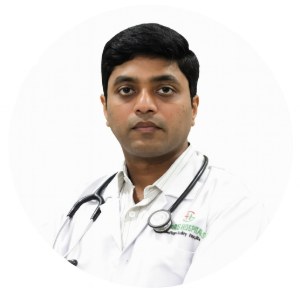
Dr. T. Siddarth Reddy
Founder and Managing Director, Senior Consultant Neurologist
- Qualifications
- MBBS, MD, DM (Neurology, Gold Medalist), Fellowship in Pediatric Neurology (Texas, USA)
- Specialty
- Adult and paediatric neurology
- Registration no.
- 61730
- OPD hours
- Monday to Saturday, 11 am to 8 pm
Questions patients ask about epilepsy and seizures
What should I do when someone is having a seizure?
Stay calm, move hard objects away, cushion the head and turn the person onto their side once the jerking stops. Do not hold them down and do not put anything in the mouth, including water, medicine or a spoon. Time the seizure and call 108 if it lasts more than 5 minutes.
Does one seizure mean I have epilepsy?
Not always. A seizure can be caused by fever, low blood sugar, alcohol or a recent head injury. Epilepsy is usually diagnosed when seizures happen without such a trigger or when tests show a high chance of further seizures.
Is epilepsy curable?
Many people become free of seizures with treatment, and some are later able to stop medicine under a doctor's supervision. Others need long-term treatment. The outlook depends on the type and cause of the epilepsy.
How long will I need to take medicine?
This varies. Doctors usually consider reducing medicine only after a person has been free of seizures for a few years, and the decision depends on the type of epilepsy and test results. Never stop medicine on your own.
Can women with epilepsy have children?
Yes. Most women with epilepsy have healthy pregnancies. It is important to plan ahead with a neurologist, because some medicines and doses are safer than others during pregnancy.
Can a person with epilepsy drive or work?
Most people with well-controlled epilepsy work normally. Driving depends on seizure control and on the licensing rules that apply. Your doctor can advise on safety at work and on activities such as swimming.
Is epilepsy a mental illness or contagious?
No. Epilepsy is a physical condition of the brain. It does not spread from person to person and is not caused by supernatural forces.
Need a neurological consultation?
Speak with the hospital team about appointments and available specialist consultations.
- Phone
- 040 4189 4777
- Address
- Siddarth Neuro Hospital
Mythri Nagar, Madeenaguda, Miyapur
Hyderabad, Telangana - OPD hours
- Dr. T. Siddarth Reddy: Monday to Saturday, 11 am to 8 pm
Dr. Naveen Reddy V: Monday to Saturday, 10 am to 6 pm - Emergency
- Emergency room and emergency stroke care unit open 24 hours, 7 days a week
- Accreditation
- NABH accredited hospital, NABL accredited laboratory
Further reading
- World Health Organization: Epilepsy
- NHS: Epilepsy
- National Institute of Neurological Disorders and Stroke: Epilepsy and Seizures
Medically reviewed by Dr. T. Siddarth Reddy, Senior Consultant Neurologist (MBBS, MD, DM (Neurology, Gold Medalist), Fellowship in Pediatric Neurology (Texas, USA)), on 19 November 2026.
This page gives general information for patients and families. It is not a diagnosis and does not replace a consultation. Symptoms alone cannot confirm a condition, and treatment depends on an individual assessment by a qualified doctor.