Headache and migraine treatment for children
Headaches are common in school-age children and are rarely serious. Learn the usual causes, the warning signs and how they are treated.
What causes headaches in children?
Most children have a headache at some point, usually with a fever, a cold or tiredness. Recurring headaches are also common. The two main types are migraine and tension-type headache, and neither is caused by a problem in the structure of the brain.
Migraine in children differs from migraine in adults. Attacks are often shorter, lasting from one or two hours to a day. The pain is frequently felt across the forehead on both sides. Nausea, vomiting, tummy pain, pallor and a wish to lie down in a dark room are typical, and the child is often well again after sleep. Some young children have episodes of tummy pain or vomiting without headache that later turn into typical migraine.
Tension-type headache is a milder, pressing ache without vomiting. Less often, headaches are caused by eyesight problems, sinus infection, poor sleep or frequent use of painkillers. Rarely, a headache is a sign of raised pressure in the head, which is why doctors ask about specific warning signs.
Headache symptoms and warning signs in children
Common symptoms
- Throbbing or pressing pain in the forehead or temples
- Nausea, vomiting or tummy pain with the headache
- Looking pale and wanting to lie down
- Dislike of bright light or noise
- Relief after sleep
Less common symptoms
- Flashing lights or zigzag lines before the headache
- Dizziness
- Tingling in a hand or around the mouth
- Headaches linked to reading or screen use
- Missing school frequently because of headaches
Get emergency help now if
- A sudden, severe headache
- Headache with fever, a stiff neck, a rash or drowsiness
- Headache with a seizure, weakness, double vision or unsteady walking
- A headache after a head injury
- Repeated vomiting in the early morning with headache
Call our 24-hour emergency line on 040 4189 4777, or call 108 for an ambulance. Do not wait for an appointment.
These symptoms have many possible causes. Having one or more of them does not confirm a diagnosis. A doctor needs to examine you to find the cause.
Causes and risk factors
Migraine has a strong hereditary element: one parent or a close relative often has it too. The brain of a child with migraine is more sensitive to changes in routine. Tension-type headache is related to stress, tiredness and posture.
Common triggers are listed here. A simple headache diary kept for a few weeks usually reveals the pattern.
Common triggers and risk factors
- Skipping meals, especially breakfast
- Not drinking enough water
- Too little sleep or irregular bedtimes
- Long hours on phones, tablets or television
- Stress around school, exams or family
- Bright sun, heat and strenuous exercise without fluids
- Uncorrected eyesight problems
- A parent with migraine
How headaches in children are assessed
In most children the diagnosis is made from the history and a normal examination, and no scan is needed. The doctor looks carefully for warning signs that would change this.
- History and headache diary
- Frequency, duration, timing, associated symptoms, school attendance, sleep, meals and screen use.
- Neurological examination
- Includes blood pressure, growth, head size, eye movements, balance and a look at the back of the eye.
- Eye check
- Tests for the need for glasses and for swelling of the optic nerve.
- MRI scan of the brain
- Advised when there are warning signs, an abnormal examination, or in very young children who cannot describe the pain.
- Blood tests
- Occasionally used to look for anaemia, thyroid problems or infection.
This list describes tests that doctors commonly use. CT, MRI, EEG and nerve conduction studies are available on site at Siddarth Neuro Hospital. For other tests, please call the hospital to confirm availability.
Treatment for headache and migraine in children
Most childhood headaches improve with regular routines and simple treatment. Medicines are used at doses suited to the child's weight and are prescribed by a doctor.
- Healthy routines
- Regular meals, enough water, a fixed bedtime, daily physical activity and limits on screen time reduce headaches in many children.
- Treating an attack
- Rest in a quiet dark room and pain relief given early in the attack. Anti-sickness medicine or migraine-specific medicine may be prescribed for older children.
- Avoiding painkiller overuse
- Pain relief on more than two or three days a week can make headaches more frequent.
- Preventive treatment
- If headaches are frequent or cause much missed school, a daily preventive medicine may be advised for a few months.
- Managing stress
- Relaxation techniques, support at school and counselling help when stress or anxiety is a trigger.
- Correcting other causes
- Glasses for eyesight problems, and treatment of sinus or sleep disorders where found.
No treatment can guarantee a particular result. Your doctor will explain the expected benefits and risks of each option for your situation.
Would you like to discuss headache and migraine in children with a specialist?
When to see a pediatric neurologist
Book a consultation if any of these apply to you or a family member.
- Headaches occur more than once a week
- Your child is missing school or activities because of headaches
- Headaches wake your child from sleep or are worst in the early morning
- The headaches are becoming more frequent or more severe
- Your child is under 5 and complains of headache repeatedly
- You have noticed changes in vision, balance, behaviour or school performance
Do not book online for an emergency
If symptoms are sudden or severe, or match the emergency signs listed above, an appointment is not the right route. Call our 24-hour emergency line on 040 4189 4777, or call 108 for an ambulance. Do not wait for an appointment.
Why choose Siddarth Neuro Hospital?
Siddarth Neuro Hospital is a specialty hospital in Miyapur, Hyderabad, focused on conditions of the brain, spine and nerves. It is NABH accredited and has a NABL accredited laboratory. It has a round-the-clock emergency room and a 24-hour emergency stroke care unit. Children with recurring headaches are seen by a neurologist with fellowship training in pediatric neurology.
At a consultation, the doctor listens to your history, examines you and explains which tests, if any, are needed. You leave with a clear plan for treatment and follow-up. Family members are welcome to attend and ask questions.
Facilities at the hospital
- Emergency room
- Open 24 hours, 7 days a week.
- Emergency stroke care unit
- Receives stroke patients at any hour.
- CT scanner on site
- Brain and spine CT scans are done in the hospital, without transfer to another centre.
- MRI scanner on site
- Detailed imaging of the brain, spine and nerves in the same building.
- EEG
- Recording of the brain's electrical activity, used in the assessment of seizures and epilepsy.
- Nerve conduction studies
- Tests of how well the nerves carry signals, used for numbness, tingling and weakness.
- Intensive care unit
- ICU beds for patients who need close monitoring.
- Operating theatres
- For brain and spine surgery.
- Neuronavigation unit
- A computer-guided system that uses the patient's scans to help the surgeon plan and locate the target precisely during brain and spine surgery.
- Rehabilitation and therapy
- Physiotherapy, occupational therapy and speech therapy for recovery after illness, injury or surgery, and for children with developmental needs.
Treatments and procedures available
- Stroke care
- Comprehensive care from emergency assessment in the stroke unit through to rehabilitation and prevention of further strokes.
- Epilepsy management
- Diagnosis with EEG and imaging, and long-term treatment for adults and children.
- Brain tumour resection
- Surgery to remove tumours of the brain, planned with MRI and neuronavigation.
- Micro-neurosurgery
- Operations on the brain, spine and nerves performed under an operating microscope.
- Deep brain stimulation
- A surgical treatment for selected patients with Parkinson's disease, tremor or dystonia.
- Minimally invasive spinal reconstruction
- Spine surgery through small incisions to relieve nerve pressure and stabilise the spine.
Whether a procedure is suitable depends on an individual assessment by the specialist.
Accreditations
- NABH
- Accredited by the National Accreditation Board for Hospitals and Healthcare Providers, which assesses hospitals on patient safety and quality of care.
- NABL
- Laboratory accredited by the National Accreditation Board for Testing and Calibration Laboratories, which assesses the accuracy and reliability of laboratory testing.
Our pediatric neurology specialist
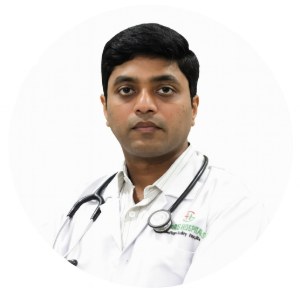
Dr. T. Siddarth Reddy
Founder and Managing Director, Senior Consultant Neurologist
- Qualifications
- MBBS, MD, DM (Neurology, Gold Medalist), Fellowship in Pediatric Neurology (Texas, USA)
- Specialty
- Adult and paediatric neurology
- Registration no.
- 61730
- OPD hours
- Monday to Saturday, 11 am to 8 pm
Questions patients ask about headache and migraine in children
Can young children really have migraine?
Yes. Migraine can begin as early as the pre-school years. In young children it may show as episodes of looking pale, vomiting, tummy pain and wanting to sleep, with or without a clear complaint of headache.
Does my child need a brain scan?
Usually not. When the pattern is typical and the examination is normal, a scan adds nothing. It is advised when there are warning signs such as early-morning vomiting, worsening headaches, or changes in vision, balance or behaviour.
Do screens cause headaches?
Long periods on screens can trigger headaches through eye strain, poor posture, missed sleep and missed meals. Regular breaks and limits on screen time help.
Could the headaches be due to eyesight?
Sometimes. A child who needs glasses may get headaches after reading or at the end of the school day. An eye test is a simple and worthwhile check.
Will my child outgrow migraine?
Many children find that attacks become less frequent or stop during the teenage years. Others continue to have migraine as adults, often less severely.
How much pain medicine is safe?
Use only the dose your doctor recommends for your child's weight, and avoid giving pain relief on more than two or three days a week. If your child needs it more often, see a doctor about prevention.
Need a pediatric neurology consultation?
Speak with the hospital team about appointments and available specialist consultations.
- Phone
- 040 4189 4777
- Address
- Siddarth Neuro Hospital
Mythri Nagar, Madeenaguda, Miyapur
Hyderabad, Telangana - OPD hours
- Dr. T. Siddarth Reddy: Monday to Saturday, 11 am to 8 pm
Dr. Naveen Reddy V: Monday to Saturday, 10 am to 6 pm - Emergency
- Emergency room and emergency stroke care unit open 24 hours, 7 days a week
- Accreditation
- NABH accredited hospital, NABL accredited laboratory
Further reading
- NHS: Headaches in children
- World Health Organization: Headache disorders
- National Institute of Neurological Disorders and Stroke: Headache
Medically reviewed by Dr. T. Siddarth Reddy, Senior Consultant Neurologist (MBBS, MD, DM (Neurology, Gold Medalist), Fellowship in Pediatric Neurology (Texas, USA)), on 19 November 2026.
This page gives general information for patients and families. It is not a diagnosis and does not replace a consultation. Symptoms alone cannot confirm a condition, and treatment depends on an individual assessment by a qualified doctor.