
Migraine and chronic headache treatment
Most headaches are not dangerous, but frequent or severe ones can be treated. Learn the types, the triggers and the warning signs that need prompt attention.
What are migraine and chronic headache?
Headaches are grouped into primary headaches, where the headache itself is the condition, and secondary headaches, which are caused by another problem such as an infection, raised pressure in the head or a blood vessel disorder. The great majority are primary.
Migraine is a primary headache that typically causes moderate to severe throbbing pain, often on one side, with nausea and sensitivity to light and sound. Attacks last from a few hours to three days. About one in four people with migraine have an aura first, such as zigzag lines or tingling, which lasts under an hour. Tension-type headache feels like a tight band around the head. Cluster headache is rarer and causes severe pain around one eye in bouts.
Headaches can become chronic, occurring on 15 or more days a month. One common reason is medication-overuse headache, where taking painkillers on many days of the month makes headaches more frequent.
Headache symptoms and warning signs
Common symptoms
- Throbbing pain on one or both sides of the head
- Nausea or vomiting
- Sensitivity to light, sound or smells
- Pain that worsens with movement
- A tight, pressing ache across the forehead or back of the head
Less common symptoms
- Flashing lights, zigzag lines or blind spots before the pain
- Tingling in the face or hand
- Difficulty finding words during an attack
- Dizziness or a spinning sensation
- A watering eye and blocked nose on the painful side
Get emergency help now if
- A sudden, severe headache that peaks within a minute
- Headache with fever, neck stiffness or a rash
- Headache with weakness, confusion, fits, double vision or slurred speech
- A headache that follows a head injury
Call our 24-hour emergency line on 040 4189 4777, or call 108 for an ambulance. Do not wait for an appointment.
These symptoms have many possible causes. Having one or more of them does not confirm a diagnosis. A doctor needs to examine you to find the cause.
Causes and risk factors
Migraine is thought to arise from a brain that is more sensitive to change, involving nerve pathways and chemicals that regulate pain. It often runs in families and is more common in women, partly because of hormonal changes. Tension-type headache is linked to stress, posture and muscle tension.
Triggers differ between people. A headache diary helps to identify them.
Factors that raise the risk
- Missed meals or dehydration
- Too little or too much sleep
- Stress, or relaxation after stress
- Hormonal changes around periods
- Bright light, strong smells or loud noise
- Alcohol and, for some, particular foods
- Frequent use of painkillers
- Family history of migraine
How headaches are assessed
Most headaches are diagnosed from the history and examination alone. Scans are not needed for typical migraine and are arranged when the pattern or examination suggests another cause.
- History and headache diary
- The pattern, duration, triggers and medicines taken are the basis of diagnosis.
- Neurological examination
- Includes a check of vision, eye movements, the back of the eye, strength and balance.
- MRI or CT scan
- Considered when there are warning signs, a new headache after the age of 50, or an abnormal examination.
- Blood tests
- May be used to look for inflammation, infection or other medical causes.
- Eye assessment
- Checks for swelling of the optic nerve, which can indicate raised pressure.
- Lumbar puncture
- Occasionally needed to measure pressure or test the fluid around the brain.
This list describes tests that doctors commonly use. CT, MRI, EEG and nerve conduction studies are available on site at Siddarth Neuro Hospital. For other tests, please call the hospital to confirm availability.
Migraine and headache treatment options
The aim is fewer and milder headaches and less disruption to daily life. Treatment is tailored to the type of headache and how often it occurs.
- Treating an attack
- Pain relief and migraine-specific medicines work best when taken early in an attack. Anti-sickness medicine may be added.
- Preventive treatment
- If headaches are frequent, a daily preventive medicine may be advised for several months. Newer preventive treatments may be considered when standard ones have not helped.
- Stopping medication overuse
- Reducing painkillers under supervision often breaks the cycle of daily headache.
- Lifestyle measures
- Regular meals, sleep and fluids, exercise and stress management reduce attacks for many people.
- Treating an underlying cause
- Secondary headaches are managed by treating the condition responsible.
- Follow-up care
- Reviews with a headache diary help to adjust treatment and decide when preventives can be reduced.
No treatment can guarantee a particular result. Your doctor will explain the expected benefits and risks of each option for your situation.
Would you like to discuss headache and migraine with a specialist?
When to see a neurologist
Book a consultation if any of these apply to you or a family member.
- Headaches occur on more than a few days each month
- You take painkillers on most days
- The pattern of your headaches has changed
- Headaches wake you from sleep or are worse on coughing or bending
- A new headache begins after the age of 50
- Headaches are affecting work, study or family life
Do not book online for an emergency
If symptoms are sudden or severe, or match the emergency signs listed above, an appointment is not the right route. Call our 24-hour emergency line on 040 4189 4777, or call 108 for an ambulance. Do not wait for an appointment.
Why choose Siddarth Neuro Hospital?
Siddarth Neuro Hospital is a specialty hospital in Miyapur, Hyderabad, focused on conditions of the brain, spine and nerves. It is NABH accredited and has a NABL accredited laboratory. It has a round-the-clock emergency room and a 24-hour emergency stroke care unit. Persistent headache is one of the most common reasons to see a neurologist.
At a consultation, the doctor listens to your history, examines you and explains which tests, if any, are needed. You leave with a clear plan for treatment and follow-up. Family members are welcome to attend and ask questions.
Facilities at the hospital
- Emergency room
- Open 24 hours, 7 days a week.
- Emergency stroke care unit
- Receives stroke patients at any hour.
- CT scanner on site
- Brain and spine CT scans are done in the hospital, without transfer to another centre.
- MRI scanner on site
- Detailed imaging of the brain, spine and nerves in the same building.
- EEG
- Recording of the brain's electrical activity, used in the assessment of seizures and epilepsy.
- Nerve conduction studies
- Tests of how well the nerves carry signals, used for numbness, tingling and weakness.
- Intensive care unit
- ICU beds for patients who need close monitoring.
- Operating theatres
- For brain and spine surgery.
- Neuronavigation unit
- A computer-guided system that uses the patient's scans to help the surgeon plan and locate the target precisely during brain and spine surgery.
- Rehabilitation and therapy
- Physiotherapy, occupational therapy and speech therapy for recovery after illness, injury or surgery, and for children with developmental needs.
Treatments and procedures available
- Stroke care
- Comprehensive care from emergency assessment in the stroke unit through to rehabilitation and prevention of further strokes.
- Epilepsy management
- Diagnosis with EEG and imaging, and long-term treatment for adults and children.
- Brain tumour resection
- Surgery to remove tumours of the brain, planned with MRI and neuronavigation.
- Micro-neurosurgery
- Operations on the brain, spine and nerves performed under an operating microscope.
- Deep brain stimulation
- A surgical treatment for selected patients with Parkinson's disease, tremor or dystonia.
- Minimally invasive spinal reconstruction
- Spine surgery through small incisions to relieve nerve pressure and stabilise the spine.
Whether a procedure is suitable depends on an individual assessment by the specialist.
Accreditations
- NABH
- Accredited by the National Accreditation Board for Hospitals and Healthcare Providers, which assesses hospitals on patient safety and quality of care.
- NABL
- Laboratory accredited by the National Accreditation Board for Testing and Calibration Laboratories, which assesses the accuracy and reliability of laboratory testing.
Our neurology specialist
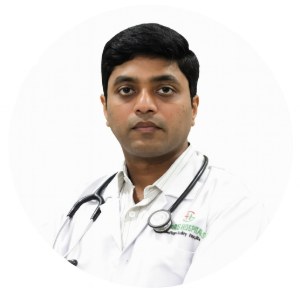
Dr. T. Siddarth Reddy
Founder and Managing Director, Senior Consultant Neurologist
- Qualifications
- MBBS, MD, DM (Neurology, Gold Medalist), Fellowship in Pediatric Neurology (Texas, USA)
- Specialty
- Adult and paediatric neurology
- Registration no.
- 61730
- OPD hours
- Monday to Saturday, 11 am to 8 pm
Questions patients ask about headache and migraine
How do I know if my headache is a migraine?
Migraine usually causes moderate to severe throbbing pain with nausea or sensitivity to light and sound, and it makes normal activity difficult. Attacks last hours to days and recur. A doctor can confirm the type from your description.
Do I need a brain scan for my headaches?
Usually not. Typical migraine and tension-type headache are diagnosed without scans. A scan is advised when there are warning signs, such as a sudden severe headache, a change in pattern or an abnormal examination.
Can painkillers make headaches worse?
Yes. Taking painkillers on many days each month can lead to medication-overuse headache. If you need pain relief more than two or three days a week, ask a doctor about preventive treatment.
Is migraine curable?
There is no permanent cure, but migraine can usually be controlled well. Many people find that attacks become less frequent with treatment and trigger control, and often with age.
Are frequent headaches a sign of a brain tumour?
This is a common worry, but headache alone is rarely caused by a tumour. Tumours usually cause other symptoms as well, such as seizures, weakness or personality change. See a doctor if your headaches are new, worsening or accompanied by other symptoms.
What can I do at home during an attack?
Take your prescribed treatment early, rest in a quiet dark room, drink water and try a cold compress. Keep a diary of attacks to share with your doctor.
Need a neurological consultation?
Speak with the hospital team about appointments and available specialist consultations.
- Phone
- 040 4189 4777
- Address
- Siddarth Neuro Hospital
Mythri Nagar, Madeenaguda, Miyapur
Hyderabad, Telangana - OPD hours
- Dr. T. Siddarth Reddy: Monday to Saturday, 11 am to 8 pm
Dr. Naveen Reddy V: Monday to Saturday, 10 am to 6 pm - Emergency
- Emergency room and emergency stroke care unit open 24 hours, 7 days a week
- Accreditation
- NABH accredited hospital, NABL accredited laboratory
Further reading
- World Health Organization: Headache disorders
- NHS: Migraine
- National Institute of Neurological Disorders and Stroke: Migraine
Medically reviewed by Dr. T. Siddarth Reddy, Senior Consultant Neurologist (MBBS, MD, DM (Neurology, Gold Medalist), Fellowship in Pediatric Neurology (Texas, USA)), on 19 November 2026.
This page gives general information for patients and families. It is not a diagnosis and does not replace a consultation. Symptoms alone cannot confirm a condition, and treatment depends on an individual assessment by a qualified doctor.