Autism and ADHD assessment in Hyderabad
Autism and ADHD are common differences in how a child's brain develops. Learn the early signs, how each is assessed and what support helps.
What are autism and ADHD?
Autism spectrum disorder and attention deficit hyperactivity disorder (ADHD) are neurodevelopmental conditions. They begin in early childhood and reflect differences in brain development. They are not caused by parenting, and they are not illnesses a child catches.
Autism affects social communication and behaviour. A child may have delayed speech, limited eye contact, less interest in sharing attention with others, repetitive movements or play, and strong preferences for routine. It is called a spectrum because it varies widely: some children do not speak, while others speak fluently but struggle with social understanding.
ADHD affects attention, activity level and self-control. A child may be far more inattentive, restless or impulsive than others of the same age, to a degree that interferes with learning and friendships. The two conditions can occur together, and both can accompany epilepsy, learning difficulties or sleep problems.
Signs of autism and ADHD
Early signs of autism
- Not responding to name by 12 months
- No pointing or showing objects to share interest by 14 to 16 months
- Delayed speech, or loss of words already learned
- Limited eye contact and little pretend play
- Repetitive movements such as hand flapping, or lining up toys
Signs of ADHD and other features
- Great difficulty sitting still or waiting for a turn
- Short attention span, forgetfulness and losing things
- Acting without thinking and frequent interruptions
- Unusual reactions to sounds, textures or tastes
- Distress at small changes in routine
- Sleep and feeding difficulties
See a doctor urgently if
- A child loses language or social skills they had
- Episodes of staring, jerking or unresponsiveness that may be seizures
- Behaviour that puts the child or others at risk of serious harm
Call our 24-hour emergency line on 040 4189 4777, or call 108 for an ambulance. Do not wait for an appointment.
These symptoms have many possible causes. Having one or more of them does not confirm a diagnosis. A doctor needs to examine you to find the cause.
Causes and risk factors
Both conditions are strongly influenced by genetics and often run in families. Other factors linked with a higher likelihood include premature birth, low birth weight and some genetic syndromes. No single cause is found in most children.
Large studies in many countries have found no link between vaccines and autism. Diet, screen use and parenting style do not cause autism or ADHD, although routines, sleep and screen habits can affect how a child manages day to day.
Factors that raise the risk
- A brother, sister or parent with autism or ADHD
- Premature birth or low birth weight
- Genetic conditions such as fragile X syndrome or tuberous sclerosis
- Epilepsy or developmental delay
- Older age of parents at the time of birth
- Being male: both are diagnosed more often in boys, though girls are frequently missed
How autism and ADHD are assessed
There is no blood test or scan that diagnoses autism or ADHD. Diagnosis is based on a detailed history, observation of the child and information from home and school. Medical tests are used to look for associated or look-alike conditions.
- Developmental and behavioural history
- Early milestones, play, communication, behaviour in different settings and family history.
- Observation and standardised tools
- Structured play-based observation for autism, and rating scales completed by parents and teachers for ADHD.
- Hearing test
- Needed for every child with delayed speech.
- Neurological examination
- Checks growth, head size, skin, muscle tone and coordination for signs of an underlying condition.
- EEG
- Requested only when seizures or loss of language are suspected.
- Genetic tests and MRI
- Considered in selected children, for example with developmental delay, unusual physical features or abnormal examination.
- Assessment of learning, sleep and mood
- These often need attention in their own right.
This list describes tests that doctors commonly use. CT, MRI, EEG and nerve conduction studies are available on site at Siddarth Neuro Hospital. For other tests, please call the hospital to confirm availability.
Support and treatment for autism and ADHD
Support is tailored to the child's strengths and difficulties. The aim is to build communication, learning and independence and to make daily life easier for the child and family. Help that starts early has the greatest effect.
- Speech and language therapy
- Develops communication, including pictures, signs or devices for children who do not speak.
- Behavioural and developmental therapy
- Structured programmes that build social, play and self-care skills and reduce difficult behaviour.
- Occupational therapy
- Helps with hand skills, daily routines and sensory sensitivities.
- Parent training
- Teaches practical strategies for communication, routines and behaviour at home.
- School support
- Classroom adjustments, an individual learning plan and guidance for teachers.
- Medicines
- Medicines can improve attention and reduce hyperactivity in ADHD when a specialist judges them suitable. No medicine treats the core features of autism, though some help with related problems such as sleep, anxiety or severe irritability.
- Treating associated conditions
- Epilepsy, sleep difficulties, constipation and anxiety are managed alongside.
No treatment can guarantee a particular result. Your doctor will explain the expected benefits and risks of each option for your situation.
Would you like to discuss autism and ADHD with a specialist?
When to see a pediatric neurologist
Book a consultation if any of these apply to you or a family member.
- Your child is not speaking as expected or has lost words
- Your child rarely makes eye contact, points or responds to their name
- A teacher reports that your child cannot focus or stay seated
- Behaviour or attention problems are affecting learning and friendships
- You want medical causes checked before or alongside therapy
Do not book online for an emergency
If symptoms are sudden or severe, or match the emergency signs listed above, an appointment is not the right route. Call our 24-hour emergency line on 040 4189 4777, or call 108 for an ambulance. Do not wait for an appointment.
Why choose Siddarth Neuro Hospital?
Siddarth Neuro Hospital is a specialty hospital in Miyapur, Hyderabad, focused on conditions of the brain, spine and nerves. It is NABH accredited and has a NABL accredited laboratory. It has a round-the-clock emergency room and a 24-hour emergency stroke care unit. A neurologist with fellowship training in pediatric neurology assesses the medical and neurological side of autism and ADHD. Physiotherapy, occupational therapy and speech therapy are available at the hospital. Please call to ask about psychology and behavioural therapy.
At a consultation, the doctor listens to your history, examines you and explains which tests, if any, are needed. You leave with a clear plan for treatment and follow-up. Family members are welcome to attend and ask questions.
Facilities at the hospital
- Emergency room
- Open 24 hours, 7 days a week.
- Emergency stroke care unit
- Receives stroke patients at any hour.
- CT scanner on site
- Brain and spine CT scans are done in the hospital, without transfer to another centre.
- MRI scanner on site
- Detailed imaging of the brain, spine and nerves in the same building.
- EEG
- Recording of the brain's electrical activity, used in the assessment of seizures and epilepsy.
- Nerve conduction studies
- Tests of how well the nerves carry signals, used for numbness, tingling and weakness.
- Intensive care unit
- ICU beds for patients who need close monitoring.
- Operating theatres
- For brain and spine surgery.
- Neuronavigation unit
- A computer-guided system that uses the patient's scans to help the surgeon plan and locate the target precisely during brain and spine surgery.
- Rehabilitation and therapy
- Physiotherapy, occupational therapy and speech therapy for recovery after illness, injury or surgery, and for children with developmental needs.
Treatments and procedures available
- Stroke care
- Comprehensive care from emergency assessment in the stroke unit through to rehabilitation and prevention of further strokes.
- Epilepsy management
- Diagnosis with EEG and imaging, and long-term treatment for adults and children.
- Brain tumour resection
- Surgery to remove tumours of the brain, planned with MRI and neuronavigation.
- Micro-neurosurgery
- Operations on the brain, spine and nerves performed under an operating microscope.
- Deep brain stimulation
- A surgical treatment for selected patients with Parkinson's disease, tremor or dystonia.
- Minimally invasive spinal reconstruction
- Spine surgery through small incisions to relieve nerve pressure and stabilise the spine.
Whether a procedure is suitable depends on an individual assessment by the specialist.
Accreditations
- NABH
- Accredited by the National Accreditation Board for Hospitals and Healthcare Providers, which assesses hospitals on patient safety and quality of care.
- NABL
- Laboratory accredited by the National Accreditation Board for Testing and Calibration Laboratories, which assesses the accuracy and reliability of laboratory testing.
Our pediatric neurology specialist
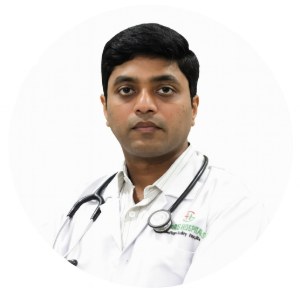
Dr. T. Siddarth Reddy
Founder and Managing Director, Senior Consultant Neurologist
- Qualifications
- MBBS, MD, DM (Neurology, Gold Medalist), Fellowship in Pediatric Neurology (Texas, USA)
- Specialty
- Adult and paediatric neurology
- Registration no.
- 61730
- OPD hours
- Monday to Saturday, 11 am to 8 pm
Questions patients ask about autism and ADHD
At what age can autism be diagnosed?
Signs are often visible by 18 months, and a reliable diagnosis can usually be made from about 2 years. If you are concerned earlier, seek an assessment, because support can start before a formal diagnosis.
Is my active child just energetic, or is it ADHD?
Most young children are active and easily distracted. ADHD is considered when inattention or hyperactivity is well beyond what is expected for age, has lasted at least six months, is present in more than one setting and interferes with daily life.
Do vaccines cause autism?
No. Extensive research involving millions of children has found no link between any vaccine and autism.
Can autism or ADHD be cured?
They are lifelong differences, not diseases to be cured. With the right support many children make substantial progress in communication, learning and independence, and difficulties often lessen with age.
Does my child need an MRI or EEG?
Not routinely. These tests do not diagnose autism or ADHD. They are used when there are seizures, loss of skills or findings on examination that suggest another condition.
Are ADHD medicines safe?
ADHD medicines have been studied for many years and are effective for many children. They can cause reduced appetite or sleep difficulty, so a specialist monitors growth, heart rate and blood pressure. The decision is made with the family.
Need a pediatric neurology consultation?
Speak with the hospital team about appointments and available specialist consultations.
- Phone
- 040 4189 4777
- Address
- Siddarth Neuro Hospital
Mythri Nagar, Madeenaguda, Miyapur
Hyderabad, Telangana - OPD hours
- Dr. T. Siddarth Reddy: Monday to Saturday, 11 am to 8 pm
Dr. Naveen Reddy V: Monday to Saturday, 10 am to 6 pm - Emergency
- Emergency room and emergency stroke care unit open 24 hours, 7 days a week
- Accreditation
- NABH accredited hospital, NABL accredited laboratory
Further reading
Medically reviewed by Dr. T. Siddarth Reddy, Senior Consultant Neurologist (MBBS, MD, DM (Neurology, Gold Medalist), Fellowship in Pediatric Neurology (Texas, USA)), on 19 November 2026.
This page gives general information for patients and families. It is not a diagnosis and does not replace a consultation. Symptoms alone cannot confirm a condition, and treatment depends on an individual assessment by a qualified doctor.