Childhood epilepsy and seizure treatment in Hyderabad
Seizures in a child are frightening to watch, but most childhood epilepsy can be controlled. Learn the types, the tests and how treatment works.
This can be an emergency
A seizure that lasts more than 5 minutes, or a child who does not wake up or breathe normally afterwards, needs emergency care. Call 108 or go to the nearest emergency department.
What is childhood epilepsy?
A seizure is a short burst of abnormal electrical activity in the brain. Epilepsy means a child has a tendency to have repeated seizures that are not caused by fever or another passing illness. It is one of the most common neurological conditions of childhood.
Seizures in children do not always look like convulsions. Absence seizures cause a blank stare lasting a few seconds, many times a day, and are often mistaken for daydreaming. Focal seizures may cause twitching of one side of the face or one arm, sometimes in sleep. Myoclonic seizures are sudden jerks, often in the morning. Infantile spasms are clusters of brief bending movements in babies under one year and need assessment within days, because early treatment protects development.
Childhood epilepsies are grouped into syndromes according to the age they start, the type of seizure and the EEG pattern. Some syndromes are outgrown by the teenage years. Others need longer treatment. Identifying the syndrome helps the doctor choose the right medicine and explain what to expect.
Seizure symptoms in children
Common symptoms
- Stiffening and rhythmic jerking of the arms and legs
- Blank staring spells with a brief pause in activity
- Sudden jerks of the arms or body
- Twitching of the face or one limb, often during sleep
- Confusion or sleepiness after an episode
Less common symptoms
- Clusters of sudden bending or nodding movements in a baby
- Sudden falls or head drops
- Lip smacking, chewing or fumbling movements
- Loss of previously learned skills or a fall in school performance
- Episodes of unusual fear, smells or tummy sensations
Get emergency help now if
- A seizure lasts longer than 5 minutes
- The child has one seizure after another without waking in between
- The child has trouble breathing or turns blue
- It is the child's first seizure, or it follows a head injury
- A baby under one year has repeated clusters of spasms
Call our 24-hour emergency line on 040 4189 4777, or call 108 for an ambulance. Do not wait for an appointment.
These symptoms have many possible causes. Having one or more of them does not confirm a diagnosis. A doctor needs to examine you to find the cause.
Causes and risk factors
In many children no cause is found, and the child is otherwise healthy and developing normally. In others epilepsy is linked to a genetic change, a difference in how the brain formed, lack of oxygen around birth, a past brain infection such as meningitis or neurocysticercosis, or a head injury.
Seizures are more likely at certain times. Recognising these triggers helps families reduce them.
Factors that raise the risk
- Missed doses of medicine
- Lack of sleep or irregular sleep
- Fever and illness
- Family history of epilepsy or febrile seizures
- Premature birth or problems around the time of birth
- Developmental delay or cerebral palsy
- Flashing lights, in a small number of children
How epilepsy in children is diagnosed
The diagnosis depends mostly on an accurate description. A phone video of an episode is extremely helpful, and parents are encouraged to record one if it is safe to do so.
- History and examination
- The doctor asks what happened before, during and after the episode, and checks development and the nervous system.
- EEG
- Records the brain's electrical activity through sensors on the scalp. It is painless. A sleep recording is often requested because some patterns appear only in sleep.
- MRI scan of the brain
- Looks for a structural cause. Young children may need sedation to lie still.
- Blood tests
- Check sugar, calcium, salts and, where relevant, metabolic conditions.
- Genetic testing
- Considered for epilepsy that begins in infancy or does not respond to treatment.
- Ruling out look-alikes
- Breath-holding spells, fainting, night terrors and tics can resemble seizures and need no epilepsy medicine.
This list describes tests that doctors commonly use. CT, MRI, EEG and nerve conduction studies are available on site at Siddarth Neuro Hospital. For other tests, please call the hospital to confirm availability.
Treatment for childhood epilepsy
Treatment is chosen for the child's seizure type, age and weight, and reviewed as the child grows. Many children need only one medicine.
- Anti-seizure medicine
- Taken every day, usually for at least two years free of seizures before the doctor considers reducing it. Doses are adjusted as the child gains weight.
- Emergency medicine
- Some children are given a rescue medicine for parents to use if a seizure lasts longer than 5 minutes.
- Treating specific syndromes
- Infantile spasms and some other syndromes need particular treatments started promptly, sometimes in hospital.
- When medicines are not enough
- A supervised ketogenic diet, epilepsy surgery or nerve stimulation may be discussed for seizures that continue despite suitable medicines.
- School and safety plan
- Guidance for teachers and carers on first aid, swimming, cycling and sleep.
- Development and learning support
- Attention, learning and mood are reviewed, because they can be affected by epilepsy or its treatment.
No treatment can guarantee a particular result. Your doctor will explain the expected benefits and risks of each option for your situation.
Would you like to discuss childhood epilepsy and seizures with a specialist?
When to see a pediatric neurologist
Book a consultation if any of these apply to you or a family member.
- Your child has had a first seizure or an unexplained blackout
- Teachers report frequent staring spells or lapses in attention
- A baby has repeated sudden jerks or spasms
- Seizures continue despite medicine
- Medicine is causing drowsiness, behaviour change or poor school performance
Do not book online for an emergency
If symptoms are sudden or severe, or match the emergency signs listed above, an appointment is not the right route. Call our 24-hour emergency line on 040 4189 4777, or call 108 for an ambulance. Do not wait for an appointment.
Why choose Siddarth Neuro Hospital?
Siddarth Neuro Hospital is a specialty hospital in Miyapur, Hyderabad, focused on conditions of the brain, spine and nerves. It is NABH accredited and has a NABL accredited laboratory. It has a round-the-clock emergency room and a 24-hour emergency stroke care unit. Children with epilepsy are seen by a neurologist with fellowship training in pediatric neurology.
At a consultation, the doctor listens to your history, examines you and explains which tests, if any, are needed. You leave with a clear plan for treatment and follow-up. Family members are welcome to attend and ask questions.
Facilities at the hospital
- Emergency room
- Open 24 hours, 7 days a week.
- Emergency stroke care unit
- Receives stroke patients at any hour.
- CT scanner on site
- Brain and spine CT scans are done in the hospital, without transfer to another centre.
- MRI scanner on site
- Detailed imaging of the brain, spine and nerves in the same building.
- EEG
- Recording of the brain's electrical activity, used in the assessment of seizures and epilepsy.
- Nerve conduction studies
- Tests of how well the nerves carry signals, used for numbness, tingling and weakness.
- Intensive care unit
- ICU beds for patients who need close monitoring.
- Operating theatres
- For brain and spine surgery.
- Neuronavigation unit
- A computer-guided system that uses the patient's scans to help the surgeon plan and locate the target precisely during brain and spine surgery.
- Rehabilitation and therapy
- Physiotherapy, occupational therapy and speech therapy for recovery after illness, injury or surgery, and for children with developmental needs.
Treatments and procedures available
- Stroke care
- Comprehensive care from emergency assessment in the stroke unit through to rehabilitation and prevention of further strokes.
- Epilepsy management
- Diagnosis with EEG and imaging, and long-term treatment for adults and children.
- Brain tumour resection
- Surgery to remove tumours of the brain, planned with MRI and neuronavigation.
- Micro-neurosurgery
- Operations on the brain, spine and nerves performed under an operating microscope.
- Deep brain stimulation
- A surgical treatment for selected patients with Parkinson's disease, tremor or dystonia.
- Minimally invasive spinal reconstruction
- Spine surgery through small incisions to relieve nerve pressure and stabilise the spine.
Whether a procedure is suitable depends on an individual assessment by the specialist.
Accreditations
- NABH
- Accredited by the National Accreditation Board for Hospitals and Healthcare Providers, which assesses hospitals on patient safety and quality of care.
- NABL
- Laboratory accredited by the National Accreditation Board for Testing and Calibration Laboratories, which assesses the accuracy and reliability of laboratory testing.
Our pediatric neurology specialist
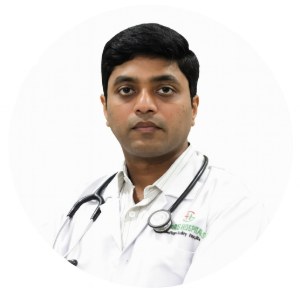
Dr. T. Siddarth Reddy
Founder and Managing Director, Senior Consultant Neurologist
- Qualifications
- MBBS, MD, DM (Neurology, Gold Medalist), Fellowship in Pediatric Neurology (Texas, USA)
- Specialty
- Adult and paediatric neurology
- Registration no.
- 61730
- OPD hours
- Monday to Saturday, 11 am to 8 pm
Questions patients ask about childhood epilepsy and seizures
What should I do when my child has a seizure?
Lay the child on their side on a soft surface, loosen tight clothing and move hard objects away. Do not put anything in the mouth and do not hold the child down. Time the seizure. Call 108 if it lasts more than 5 minutes or the child does not recover normally.
Will my child outgrow epilepsy?
Many children do. Several childhood epilepsy syndromes stop by the teenage years, and medicine can then be withdrawn under supervision. Others continue into adult life. The type of epilepsy is the best guide.
Do epilepsy medicines affect learning or growth?
Most children take their medicine without problems. Some medicines can cause sleepiness, irritability or changes in appetite, especially at the start. Tell the doctor if you notice changes, as the dose or medicine can be adjusted.
Can my child go to school and play sports?
Yes. Children with epilepsy should attend school and take part in most activities. Swimming and cycling need adult supervision, and teachers should know what to do if a seizure occurs.
Is an EEG painful? Does my child need to be asleep?
An EEG is painless. Sensors are placed on the scalp with paste. A sleep recording is often useful, so you may be asked to keep your child awake late the night before.
Are staring spells always seizures?
No. Daydreaming is common. Absence seizures are brief, start and stop abruptly, interrupt speech or activity and cannot be stopped by calling the child's name. An EEG helps to tell the difference.
Need a pediatric neurology consultation?
Speak with the hospital team about appointments and available specialist consultations.
- Phone
- 040 4189 4777
- Address
- Siddarth Neuro Hospital
Mythri Nagar, Madeenaguda, Miyapur
Hyderabad, Telangana - OPD hours
- Dr. T. Siddarth Reddy: Monday to Saturday, 11 am to 8 pm
Dr. Naveen Reddy V: Monday to Saturday, 10 am to 6 pm - Emergency
- Emergency room and emergency stroke care unit open 24 hours, 7 days a week
- Accreditation
- NABH accredited hospital, NABL accredited laboratory
Further reading
- World Health Organization: Epilepsy
- NHS: Epilepsy
- National Institute of Neurological Disorders and Stroke: Epilepsy and Seizures
Medically reviewed by Dr. T. Siddarth Reddy, Senior Consultant Neurologist (MBBS, MD, DM (Neurology, Gold Medalist), Fellowship in Pediatric Neurology (Texas, USA)), on 19 November 2026.
This page gives general information for patients and families. It is not a diagnosis and does not replace a consultation. Symptoms alone cannot confirm a condition, and treatment depends on an individual assessment by a qualified doctor.